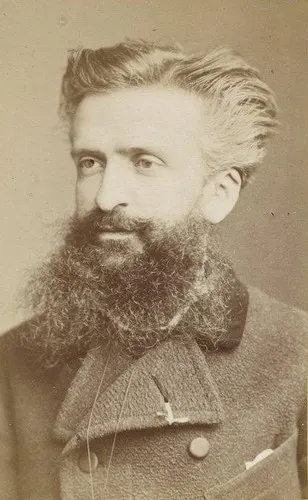
Photo of Gustave Le Bon
Open Library

Gustave Le Bon

1 standalone book

Charles-Marie Gustave Le Bon (7 May 1841 – 13 December 1931) was a French polymath known for his work in anthropology, psychology, sociology, medicine, invention, and physics. He earned a medical degree from the University of Paris in 1866 but chose not to practice medicine formally. Instead, he began a writing career the same year, publishing medical articles and books. After the Franco-Prussian War, he joined the French Army and later traveled widely across Europe, Asia, and North Africa, where he studied different peoples and civilizations. He developed an essentialist view of humanity and invented a portable cephalometer during his travels. In the 1890s, he turned to psychology and sociology, producing his most influential work, The Crowd: A Study of the Popular Mind, in 1895. He proposed that crowds form a new psychological entity shaped by the "racial unconscious." He also conducted experiments in physics and wrote popular books on the subject, anticipating the mass–energy equivalence and the Atomic Age. Le Bon maintained diverse interests throughout his life. He was criticized by parts of the French academic community for his politically conservative views and was critical of majoritarianism and socialism. He died in 1931.

Born
1841

Books by Gustave Le Bon
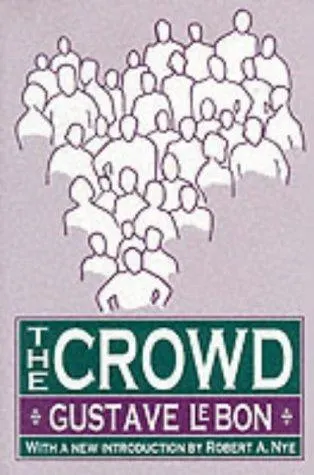
  1. Cover of Psychologie des foules
    Buy on Amazon

Reading order compiled from author/publisher guidance and verified bibliographic data. Spotted a wrong order, a missing book, or any other mistake? and we'll correct it.