IFLA Series on Bibliographic Control Books in Order
Rate this series:
🎧 Listen to Functional requirements for bibliographic records on Audible
The IFLA Series on Bibliographic Control, developed by the IFLA Study Group on the Functional Requirements for Bibliographic Records, establishes a user-centered conceptual framework for bibliographic description and access. It introduces the Functional Requirements for Bibliographic Records (FRBR), a model that defines the relationships between bibliographic entities to support effective retrieval in digital library systems. The series, grounded in the International Cataloguing Principles (ICP), provides a foundation for modern cataloging practices independent of specific national standards.
IFLA Series on Bibliographic Control is published by K. G. Saur Verlag and K. G. Saur Verlag.
Books in this series
Ordered by first publication where known. The official numbering for this series is incomplete in our sources, so we don't show series numbers we can't verify.
-
 Buy on Amazon
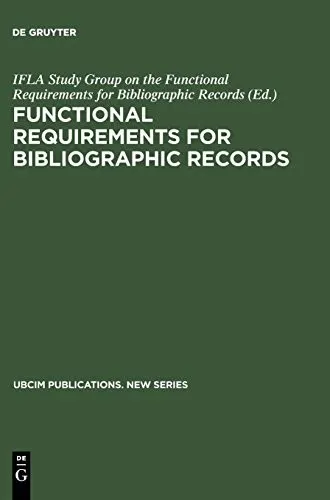
Functional requirements for bibliographic records
2009 · IFLA Study Group on the Functional Requirements for Bibliographic Records.
Read more → - Buy on Amazon
2009 · International Federation of Library Associations and Institutions
The International Cataloguing Principles (ICP) serve as the foundational framework for creating bibliographical cataloging rules in libraries.…
Read more →
Frequently asked questions
What order should I read the IFLA Series on Bibliographic Control books in?
Read them in publication order — the list above is sorted by first publication where known, starting with “Functional requirements for bibliographic records”.
How many books are in the IFLA Series on Bibliographic Control series?
We list 2 books by IFLA Study Group on the Functional Requirements for Bibliographic Records. , published in 2009.
Where can I buy the IFLA Series on Bibliographic Control books?
Each title above links to Amazon. See our affiliate disclosure.
More series like IFLA Series on Bibliographic Control



Reading order compiled from author/publisher guidance and verified bibliographic data. Spotted a wrong order, a missing book, or any other mistake? and we'll correct it.